Why Dismantling NCAR is a Huge Mistake

Yesterday, the White House rocked the scientific world by announcing that it would be dismantling and substantially defunding the National Center for Atmospheric Research (NCAR), beginning “immediately.”

This is a scientific catastrophe.

“I’m not going for hyperbole, but I firmly believe we’re talking about setting back science in this country by decades,” Antonio Busalacchi, president of NCAR’s parent body, the University Corporation for Atmospheric Research, said today at the annual meeting of the American Geophysical Union. “And not just science—we’re talking about [scientific] input that saves lives, [saves] property, advances economic development, and [enhances] national security,” he said.

NCAR is an organization most people have probably never heard of. But it is extremely well known in the earth sciences field, where it provides basic research fundamental to our understanding of such issues as coastal flooding, wildfires, 90-day weather forecasts, and hurricane forecasting.

It has even played a role in improving airline safety. “We’ve not had a casualty [in many years] from an aircraft crash due to wind shear or downbursts,” Busalacchi said. “That’s a result of a monitoring system, put in for severe, extreme weather” that was developed by NCAR.

Why is NCAR being dismantled? According to comments given to USA Today by Russ Vought, director of the White House Office of Management and Budget, it’s because of three main offenses: (a) it is a hub of “climate alarmism”; (b) it is engaged in excessively woke activities; and (c) it has done research on the impact of “weather conditions and changing climate” on wind energy.

All of these reasons are bogus.

“Climate alarmism” is activism. Organizations like NCAR are not activists or lobbyists. “We are physical scientists.” Busalacchi said. “We may inform policy, but we’re not political scientists. [Our job] is not to prescribe policy.”

Nor is the Center radically “woke.” In fact, the “woke” activities singled out by the Administration were small aspects of what the Center has done. One was the Rising Voices Center for Indigenous and Earth Sciences, designed to “make the sciences more welcoming, inclusive, and justice-centered” for indigenous peoples. NCAR dropped its funding for the project in January 2025, shortly after President Trump’s anti-DEI executive order was issued, Busalacchi said. “We were one of the very first [to comply with that order]. In less than 72 hours we were in complete compliance.” (It’s not clear whether the Center remains active under different funding.)

The other singled-out activity was an art exhibit focusing on humanity’s association with water. Why that is “woke” is not readily apparent. “Water is a natural resource,” Busalacchi said. “It should be apolitical.” And he noted, “no federal funding was received [for] that art exhibit.”

As for wind power? Yes, that’s a truly dangerous third rail in today’s Administration, but NCAR wasn’t building windmills, Busalacchi noted: it was helping to forecast power generation from them. By doing so, he said, it was saving money for Americans ratepayers by lowering their utility bills.

Another part of Vought’s order called for salvaging those portions of NCAR that the Administration does find useful, and splitting them into multiple smaller centers. That, too, is counterproductive. To begin with, Busalacchi noted, it will produce disorganization and inefficiency because the various parts of the center’s activities reinforce each other. “They go hand in hand,” he said.

Not only will splitting them into separate smaller centers impede the science, he said, but it will waste considerable amounts of money by requiring multiple new HR systems, IT systems, legal systems, communication systems, press offices, etc.

“It’s trite to say it, but the whole really is greater than the sum of the parts, ” Busalacchi said.

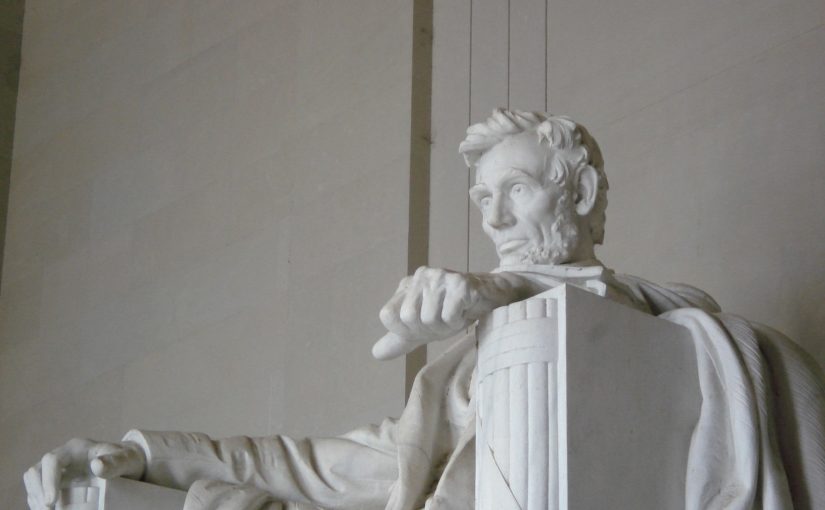
Photo by en:user:Daderot, CC BY-SA 3.0 http://creativecommons.org/licenses/by-sa/3.0/, via Wikimedia Commons

Goat Tuesday: A call for Christians to reassess their values in today’s political environment

Today, as I write this, is Tuesday of Holy Week. It’s not one of the major days—but according to the Gospel of Matthew this was the day Jesus told one of his key stories: the one about the sheep and the goats. And even if you are not religious, it appears to be an extremely potent story for the world we currently inhabit.

It goes like this (paraphrased and condensed). At the time of judgment, everyone will be called before Christ, who will divide them into two groups: sheep and goats. (Spoiler: it’s better to be a sheep.)

He will turn to the sheep and commend them for their behavior: I was hungry and you gave me food, I was thirsty and you gave me drink, I was a stranger and you welcomed me, I was naked and you clothed me, I was sick and you visited me, I was in prison and you visited me.”

Baffled, the sheep respond: “Lord, when did we see you hungry and feed you, or thirsty and give you drink? When did we see you a stranger and welcome you, or naked and clothe you? When did we see you sick or in prison and visit you?”

The reply: “Truly, I say to you, as you did it to one of the least of these my brethren, you did it to me.” 

He then turns to the goats and says, “I was hungry and you gave me no food, I was thirsty and you gave me no drink, I was a stranger and you did not welcome me, naked and you did not clothe me, sick and in prison and you did not visit me.”

They too are baffled and ask: “Lord, when did we see you hungry or thirsty or a stranger or naked or sick or in prison, and did not minister to you?”

The reply: “Truly, I say to you, as you did it not to one of the least of these, you did it not to me.”

As I noted above, all of this was on the Tuesday before what we now celebrate as Easter. That alone makes it timely. But it also frightens me about us as a country. We seem to be turning into a nation of goats. (And note that both the sheep and the goats call Jesus “Lord.”)

Not that I feel all that comfortable writing this, because every time I get irritated at a homeless person blocking a drive-through begging for money, or camping in the park two blocks away, beating what used to be flower beds into a sea of trash, I reveal my inner goat. We all have one.

My fear for America is that a lot of Christians seem to be celebrating their inner goat as a virtue.

So, I may be adding to my Holy Week observations. The best known are Easter, Palm Sunday, Good Friday, and Maundy Thursday. I’m going to add Goat Tuesday to my own list. Not, I should add, as a time for condemning others, but for looking to make sure we’re not overlooking goat-like failings in ourselves. Because, as Jesus said in another of what I see as a core teaching, what it the point in trying to pick a speck out of your neighbor’s eye, if you have a log in your own eye? Instead, remove the log from your own eye, so you can see clearly to remove the speck from your neighbor’s.

And yeah, this means me.

How Trump’s Tariffs are Deliberately Designed to Reduce Imports

I was going to ask on Facebook if anyone here knew how Trump’s tariffs were calculated, but the NYT appears to have back-calculated it, and the Office of the US Trade Representative has posted an explanation that confirms this.

The bottom line is that the tariffs are based solely on the percentage trade deficit with each country (with a minimum of 10 percent). They are NOT done product by product, as would be more normal. Thus, if we import 30 percent more from a country than we export to it, the tariff is 15 percent (because in an apparent effort to somewhat soften the blow, the tariffs are set at 1/2 of the percentage trade deficit).

The posted formula is more complex than that, and is full of Greek letters and opaque terminology, but when you wade through the math, it becomes exactly what the NYT describes. Most confusing are a pair of parameters for import elasticity with respect to price and tariffs that are set at 4 and .25, then multiplied together. The two parameters actually make sense, but it looks like their values aren’t particularly well known and were set to cancel out as a sort of best guess.

The stated goal of these calculations is to find a tariff rate that will bring the trade deficit to zero, based on President Trump’s long-standing belief that trade deficits are stealing from Americans.

That is vastly over-simplified. Yes, there are lots of manufacturing jobs that have migrated overseas, especially in certain industries. Yes, high tariffs would (presumably) bring many of them back, at least eventually. But we would then be paying much higher U.S. wages for these products, and prices would go up.

Furthermore, people in foreign countries would have less money to buy our stuff, so our exports would go down.

Also, money from trade deficits migrates back to the U.S. in the form of overseas investments. These can be controversial, but they are one of the things President Trump claims to want. Shutting off the money that produces them does not seem wise.

The bottom line is that trade deficits have been going on for a long time in the U.S.–five decades, according the Office of the U.S. Trade Representative–and the economy has greatly expanded. Again, yes jobs in certain sectors have migrated, but it President Trump wants to bring some of those back, a more focused approach would seem more appropriate and less disruptive, overall.

Finally, the calculation used by the U.S. Trade Representative’s office appears based on the highly unlikely assumption that other countries won’t retaliate. If they do, our exports would drop, and the calculation would have us raise our tariffs. That’s a formula for everyone’s tariffs spiraling into the stratosphere. That said, President Trump is known for using strong actions as scare tactics, so it’s possible that this will be temporary.

Masks: the Golden Rule is not a sign of weakness.

I’ve said this before (in fact, I’m using the same photo as last time), but it’s worth repeating. The latest run of the University of Washington’s coronavirus model shows 363,000 deaths by the end of December, with the death rate hitting 2,900 a day by then–a horrible projection for what might happen in January.

But if we can raise the rate of mask-wearing, especially indoors, that number of deaths falls by 86,000. Given that more than 200,000 people have already died, that means the number of new deaths is cut in half. Simply by biting the bullet and wearing masks. (Note, I may not have these figures exactly correct; this was breaking news on TV a few minutes ago, and I didn’t have time to grab a pen. But I’m close enough.)

Mask wearing is not a sign of weakness. It’s not even something you do for yourself. It protects you some, but it works best if the people around you are also doing it.

Mask wearing is something you do primarily for others.

If they reciprocate, THAT protects you. But even if they don’t, it sends a signal of strength. “I care.” Why is that so controversial?

It’s the Golden Rule in action.

It’s that simple.

Trump, Lincoln and Rosa Parks

For all his flaws, Donald Trump has been handed the opportunity to go down in history on the same page as Abraham Lincoln and Lyndon B. Johnson.

The two are, of course, very different Presidents, separated not only by political party, but 100 years of history. In 1862, Lincoln signed the Emancipation Proclamation. And 103 years later, Johnson signed the Voting Rights Act of 1965.

To the extent history lurches toward justice in big, widely spaced steps, those were probably the two biggest lurches in racial justice in American experience.

But to all appearances, America is poised to make another big lurch forward. The details are still being worked out, but polls show that 84 percent of Americans support the protests, at least to some degree–a level of agreement rarely seen about anything.

And yet, even today, Trump was defending choke holds as often being “innocent and perfect” and suggesting he was a better racial-justice president than Abraham Lincoln, apparently based on the economic surge that blessed his first few years.

Continue reading Trump, Lincoln and Rosa Parks

Are we finally reaching a moment of truth on race?

As an older white guy, I’ve been unsure what to write about the present situation in America. Much of the online and news space does, and should, belong to people of color and Millennials. They are, and should be, the future. In fact, I am increasingly impressed by how today parallels events from 55 years ago.

Continue reading Are we finally reaching a moment of truth on race?

Why a Mask IS a Political Statement…Just Not a Partisan One

Unless you’ve had the news turned off for the past week, you know that the Mask Wars are on, with a lot of people suggesting that wearing a mask marks you as a Democrat while not wearing one marks you as Republican.

And superficially, there’s something to that. We have a President who declines to wear a mask in public and who not only taunts Joe Biden for wearing one, but at a recent press conference shamed a reporter for being “politically correct” when the reporter refused to take off his mask at the President’s request.

Continue reading Why a Mask IS a Political Statement…Just Not a Partisan One

Covid-19 & the Emperor’s New Clothes

We all know the story of the emperor’s new clothes. In it, the emperor is hoodwinked by rogues who take his money and make him…nothing. “Nothing” that his advisors, fearful of offending him, declare to be the finest finery in the land.

Then, the emperor dons the non-existent robes…and a little child calls him out, exclaiming, “But the Emperor has nothing on at all!”

Except…The original fable, by Hans Christian Andersen, is a little more complex.

Continue reading Covid-19 & the Emperor’s New Clothes

How to Make COVID-19 Evolve to Become Less Dangerous

Donald Trump says that even without a vaccine, COVID-19 will eventually fade away. And amazingly, the science says he might be right…though not if we follow his plan for reopening the country.

The science in question is evolutionary virology.

It says is that under certain circumstances viruses will evolve into less virulent forms. In fact, this might even be what happened to the 1918 Spanish Flu…though not until after it killed tens of millions of people.

Let me explain.

In order to be an evolutionarily successful, virus can’t just infect one person, they have to jump from one person to another. They can do that by making us cough, giving us diarrhea that contaminates other people’s food or water, or giving us sores that shed virus particles onto anyone or anyone we touch.

I.e., they make us sick.

But if they make us too ill, too quickly, they don’t get much chance to spread because we either collapse into bed, away from other people, or make others leery enough of catching the disease that they take suitable precautions.

Continue reading How to Make COVID-19 Evolve to Become Less Dangerous

The False Controversy of Vote by Mail

*Image credit: Chris Phan of himself using a vote-by-mail dropbox (a stamp-free alternative to USPS), via Wikipedia Commons,.

Yesterday, California Governor Gavin Newsom signed an executive order converting California’s November election entirely to vote-by-mail.

It’s a politically controversial decision, almost guaranteed to be contested in the courts.

It has also been described by CNN, Vox, and probably others as making California the first state to automatically send mail-in ballots to all registered voters.

Apparently, these news outlets never heard of Oregon. We’ve been conducting all of our elections this way for 20 years. In fact, one of my next projects is working my way through our spring ballot, which is crammed not only with primary campaigns, but important local issues.

The only thing that’s different about California’s vote-by-mail program is that Newsom did it by executive order. We did it by a voter-approved initiative all the way back in 1998.

Continue reading The False Controversy of Vote by Mail